The Importance of First Aid Training for Teachers: Creating a Safe Learning Environment
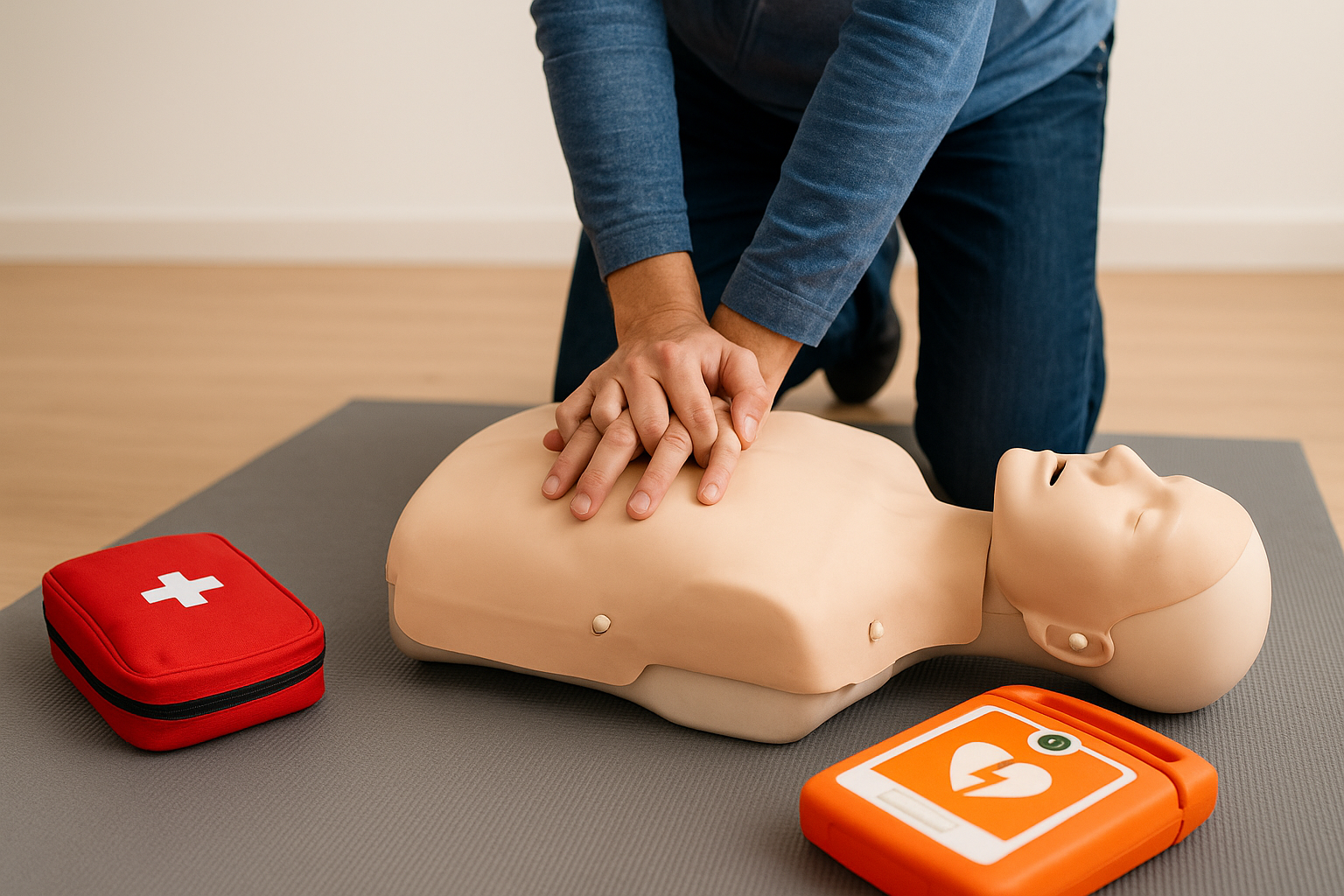
First Aid Training for Teachers: A group of teachers in a classroom setting is actively participating in a first aid training session. The instructor, wearing a blue polo shirt, is demonstrating how to apply a bandage to another teacher's arm. On a table in the foreground, a red first aid kit is visible alongside other medical supplies and a CPR manikin. The image highlights the importance of first aid skills for educators in creating a safe learning environment for students.
In today’s schools, ensuring the safety of students is a top priority. Teachers are on the front lines when it comes to student well-being, and being prepared for emergencies is crucial. First aid training equips teachers with the skills to respond effectively to accidents, medical emergencies, and unexpected health situations, creating a safer and more confident learning environment.
Why First Aid Training Matters for Teachers
Accidents and medical emergencies can happen anywhere, at any time. From playground injuries to sudden allergic reactions, teachers are often the first responders. First aid training helps teachers:
Respond Quickly and Effectively: Immediate action can prevent minor injuries from becoming severe. Knowledge of CPR, choking rescue techniques, and wound care is vital.
Reduce Anxiety During Emergencies: Teachers trained in first aid feel more confident and composed during critical situations, providing calm leadership in the classroom.
Enhance Student Safety: Schools that prioritize first aid create a safer environment for students, parents, and staff alike.
Common Scenarios Where First Aid Skills Are Essential
Choking and Allergic Reactions
Teachers equipped with first aid skills can recognize signs of choking or anaphylaxis and act quickly, potentially saving a child’s life.Minor Injuries
Cuts, scrapes, and bruises are common in schools. Proper first aid ensures these injuries are treated promptly and effectively, preventing infections.Sudden Illness
Heart attacks, asthma attacks, or fainting incidents can occur unexpectedly. First aid training allows teachers to stabilize students until medical professionals arrive.
Benefits of First Aid Certification for Teachers
Obtaining official first aid certification not only boosts a teacher’s confidence but also demonstrates a school’s commitment to student safety. Certified teachers can:
Serve as certified first responders within the school
Lead safety drills and educate students about health and safety practices
Provide parents and school administrators peace of mind
Choosing the Right First Aid Course for Teachers
When selecting a first aid course, teachers should look for programs that cover:
CPR and AED training
Emergency response planning
Management of common school injuries
Specialized training for children and adolescents
At AquaSafe Pro Training, our courses are designed to equip teachers with the practical skills and knowledge necessary to handle emergencies confidently. With flexible schedules and hands-on training, teachers can gain certification quickly and effectively.
Creating a Culture of Safety in Schools
First aid training is not just a requirement; it’s a commitment to fostering a safe and supportive learning environment. By ensuring teachers are prepared, schools can minimize risks, reduce anxiety during emergencies, and create a culture where safety is a shared responsibility.
Empower your teaching staff today! Enroll in our First Aid and CPR Training Courses at AquaSafeProTraining.caand help create a safer, more confident learning environment for every student.
Disclaimer
This blog post is for informational and educational purposes only. It is not a substitute for professional medical advice, diagnosis, or treatment. Always seek the guidance of a qualified health professional or certified first aid trainer for medical emergencies. AquaSafe Pro Training is not responsible for any injury, illness, or harm resulting from the use of the information provided in this article.
Passing Your Public Health Inspection: A Pool Operator's Checklist
A public health inspector with a clipboard and gloves takes a water sample from a clean swimming pool during a safety inspection.
A public health inspection can be a stressful event for any aquatic facility manager or pool operator. A smooth inspection isn't about luck—it's about meticulous safety management and operational readiness. This guide is your comprehensive checklist to ensure your facility not only meets but exceeds Ontario's public health regulations.
Following this checklist will help you maintain a safe and compliant facility, protect swimmers, and show inspectors that your aquatic leadership is top-notch.
1. Water Quality & Chemistry
This is the heart of a successful inspection. Inspectors will scrutinize your water chemistry logs and test the water themselves.
✅ Maintain Daily Records: Ensure all daily records are up-to-date and signed. These records should document chlorine levels, pH, alkalinity, and water temperature at regular intervals.
✅ Visibility Standard: Confirm that the black disc at the deepest point of your pool is clearly visible from the deck. This is a non-negotiable standard for safety and water clarity.
✅ Chemical Storage: All pool chemicals must be stored securely, correctly labeled, and in a well-ventilated area, away from public access.
2. Safety Equipment & Documentation
Public health inspectors verify that all required safety equipment is present and in good working order.
✅ Safety Equipment Check: Confirm that all equipment is in place and undamaged, including the electrically insulated reaching pole, buoyant throwing aids, and a backboard.
✅ Emergency Action Plan (EAP): A written and accessible EAP is mandatory. All staff, especially those with Lifesaving Society certifications, must be trained in these procedures.
✅ First Aid Kit: Your WSIB-approved first aid kit must be fully stocked with all required supplies and readily accessible.
3. Facility Maintenance & Signage
A clean and well-maintained facility reflects a commitment to safety.
✅ Cleanliness & Debris: Ensure all pool decks, locker rooms, and washrooms are clean and free of standing water or debris.
✅ Proper Signage: Verify that all required signs are posted and clearly visible. This includes bather load limits, pool rules, and emergency procedures.
✅ Working Equipment: All mechanical equipment, including circulation and filtration systems, must be in continuous operation and good repair.
4. Staffing & Training
Your team is your greatest asset. Inspectors will confirm that your staff holds the proper certifications.
✅ Certification Verification: Have up-to-date certifications for all staff, including Lifesaving Society certifications for lifeguards and WSIB first aid for designated employees.
✅ Staffing Levels: Ensure you have the appropriate number of lifeguards on duty based on pool classification and bather load.
Get Certified and Get Confident
Passing an inspection isn't just about avoiding a fine; it's about protecting the public and showing your professionalism. Don't leave your facility's safety to chance.
AquaSafe Pro Training provides the industry's most trusted and Lifesaving Society certified training for pool operators, first aid, and aquatic leadership. Our courses will give you and your team the skills and knowledge needed to run a world-class facility and pass any inspection with confidence with a focus on risk mitigation and water safer management
Ready to boost your expertise? Book your next course today to ensure your facility is always inspection-ready!
Disclaimer: This blog post is for informational purposes only and does not constitute legal or medical advice. The information provided is intended as a guide and should not be considered a substitute for professional consultation, training, or compliance with all applicable municipal, provincial, and federal regulations. AquaSafe Pro Training is not liable for any actions taken or not taken based on the contents of this post. For professional guidance, please consult with your local public health authority or a qualified legal professional.
Ontario Public Pool Incident Reporting: A Guide for Certified Pool Operators
Certified pool operators in uniforms inspect and test the water quality at an outdoor public swimming pool, ensuring safety and compliance during daytime.
Incident reporting is a critical part of public pool operation in Ontario. For those working toward or maintaining their Pool Operator certification, understanding these requirements is essential for compliance and safe facility management.
This guide explains what Ontario Regulation 565 (Public Pools) says about incident reporting, and how AquaSafe Pro Training prepares operators through recognized Pool Operator training and certification courses.
📌 This article is for informational purposes only and is not legal advice. Always refer to Ontario Regulation 565 and your local public health unit for official requirements.
📑 Why Incident Reporting Matters for Certified Pool Operators
Whether you are newly trained or have years of experience, accurate incident reporting ensures:
Compliance with Ontario’s public health laws
Transparent communication with public health authorities
Safer aquatic environments for all bathers
🏊♂️ Key Reporting Rules Under Ontario Regulation 565
1. Immediate Closure Requirements
Regulation 565 requires that certain incidents require immediate closure of the pool, including:
Fecal or vomit contamination
Presence of broken glass or hazardous debris in the pool basin
Mechanical or equipment failure affecting water quality or safety
2. Notification to Public Health
In some cases where a pool undergoes new construction, alterations, or repairs, or opens after a prolonged period of time, Regulation 565 requires notification to the local public health unit.
3. Documentation in the Pool Logbook
Regulation 565 requires that operators record:
The date and time of incidents
A description of the event
Corrective actions taken, including pool closure and re-opening times
Other relevant information such as the names of staff involved in the response
These records must be kept on site and available for review by public health inspectors.
🎓 How AquaSafe Pro Training Helps Operators Stay Compliant
At AquaSafe Pro Training, our Pool Operator Level 1 and Level 2 courses—recognized by the Lifesaving Society Ontario—cover:
Understanding Ontario Regulation 565 requirements in detail
Step-by-step procedures for incident reporting
Proper logbook documentation for inspections
Communication protocols with public health officials
Our Pool Operator certification programs give you the skills to confidently meet Ontario’s public pool compliance requirements.
👉 Register for Pool Operator Training & Certification in Ontario
🔒 Disclaimer
This article is for educational purposes only and does not constitute legal advice. Always follow Ontario Regulation 565 and guidance from your local public health unit.
🛟 Building a Culture of Safety: Leadership Strategies for Aquatic Supervisors
Aquatic supervisors leading poolside safety training, illustrating leadership strategies for building a culture of safety learned through safety management courses offered by Aquasafe Pro Training.
Introduction: Why Aquatic Safety Starts with Leadership
Every well-run aquatic facility has one thing in common: a strong culture of safety. While trained lifeguards and reliable equipment are vital, the people responsible for leading aquatic teams—Aquatic Supervisors, Pool Managers, and Facility Operators—play the most critical role in reducing risk and responding effectively to emergencies.
At AquaSafe Pro Training, our Aquatic Supervisor Certification Course (approved by the Lifesaving Society of Ontario) helps develop the safety leadership skills every aquatic professional needs.
This post outlines five key leadership strategies you can implement today to build a stronger, safer aquatic environment—and meet the expectations of Ontario Regulation 565 – Public Pools.
1. ✅ Set the Standard with Visible, Proactive Supervision
Aquatic Supervisors should not just respond to incidents—they must actively model the behaviours they expect from their lifeguards. This includes:
Regularly walking the pool deck
Observing guard scanning patterns and posture
Giving real-time coaching in a respectful, professional manner
Keeping an open line of communication with staff
➡️ Our Aquatic Supervisor course includes practical tools for monitoring staff while reinforcing compliance with public pool safety regulations.
2. ✅ Run Effective In-Service Trainings and Emergency Drills
Routine emergency response drills (such as spinal, drowning, or missing child scenarios) ensure that guards know how to react in real situations.
Best practices include:
Using surprise drills to test vigilance
Practicing coordinated multi-guard responses
Debriefing sessions with supportive, actionable feedback
➡️ Participants in our Aquatic Safety Management workshops learn how to plan, run, and evaluate drills using Lifesaving Society standards.
3. ✅ Maintain Updated Zone Coverage and Risk Assessments
Supervisors must ensure that zone coverage charts, rotation schedules, and bather load limits are always current—especially during busy public swims or special events.
Leadership responsibilities include:
Reviewing and adjusting scanning zones after any layout change
Completing and updating risk assessments for each area
Ensuring lifeguard numbers meet minimum coverage needs
➡️ This risk-based approach is built into our Lifesaving Society–recognized aquatic supervisor training, available online or onsite through AquaSafe Pro Training.
4. ✅ Encourage Continuous Learning and Certification Renewal
A strong safety culture is one where learning never stops. Supervisors can motivate guards and facility staff to:
Renew National Lifeguard certifications and Standard First Aid
Attend Pool Operator Level 1 training to better understand mechanical systems
Participate in leadership courses to take on more responsibility
➡️ AquaSafe Pro Training offers:
First Aid & CPR-C recertification
Pool Operator Certification (Level 1 and Level 2)
SEE Auditor, Aquatic Safety Inspector, Aquatic Safety Auditor
All aligned with Lifesaving Society guidelines and provincial safety standards.
5. ✅ Foster Accountability Without Blame
Mistakes happen. What defines a safety-first culture is how your team responds. Instead of assigning blame, use each incident or near-miss as an opportunity for team learning.
Pro leadership tips:
Create anonymous reporting systems
Hold open discussions after drills or incidents
Reward proactive safety behaviors (like hazard identification)
➡️ Our courses emphasize coaching-based supervision—a modern, effective approach that builds team trust and improves safety performance.
Why Choose AquaSafe Pro Training for Aquatic Leadership Courses?
At AquaSafe Pro Training, we specialize in aquatic safety training in Ontario. Our courses are designed to help Aquatic Supervisors:
Lead confident, capable lifeguard teams
Ensure compliance with Ontario Regulation 565 – Public Pools
Build practical leadership and communication skills
Improve facility readiness through risk management training
Our offerings include:
🟦 Aquatic Supervisor and Aquatic Manager Certification
🟦 Pool Operator Level 1 and Level 2 Certification
🟦 First Aid & CPR-C Certification
🟦 Aquatic Safety Inspector and Auditor Certification
🟦 SEE Auditor Certification
⚠️ Disclaimer: Compliance Note
This blog post is for educational purposes only and does not constitute legal advice. Facility operators and supervisors are responsible for reviewing and adhering to Ontario Regulation 565 – Public Pools and should consult their local public health unit for guidance.
📢 Ready to Lead with Confidence?
👉 Register for Aquatic Supervisor Training Today
Empower your team. Protect your patrons. Build a culture of safety that lasts.
✅ 5 Daily Equipment Checks Every Certified Pool Operator Should Be Doing
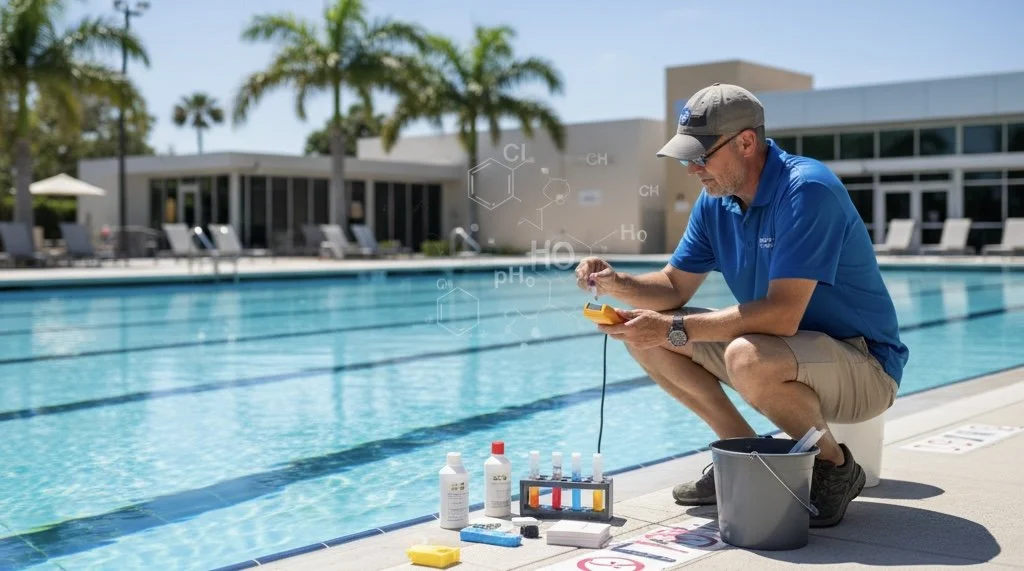
Certified pool operator performing daily equipment checks at an outdoor swimming pool, inspecting pumps, filters, and chemical testing kits in a professional setting. Ideal blog post visual for www.aquasafeprotraining.ca about essential daily pool maintenance routines for certified pool operators. This image helps demonstrate expertise and best practices in pool safety and equipment management.
Introduction: Why Daily Equipment Checks Matter
Running a public pool involves much more than managing chlorine levels. As a certified pool operator, your daily inspections play a critical role in protecting swimmers, maintaining legal compliance (e.g., Ontario Regulation 565—Public Pools), and ensuring the facility runs safely and smoothly.
At AquaSafe Pro Training, our Pool Operator Level 1 course—certified by the Lifesaving Society of Ontario—prepares aquatic professionals to confidently handle these daily responsibilities.
Here are five essential daily equipment checks every trained pool operator should perform to reduce risk and enhance aquatic safety.
1. ✅ Check Pool Water Chemistry and Disinfection Levels
Why it matters: Proper water balance isn't just about swimmer comfort—it's about disinfection and illness prevention.
What to check daily:
Free chlorine and combined chlorine levels
pH range (ideally 7.2–7.8)
Alkalinity and calcium hardness
Temperature, especially in spas or therapy pools
Automated feeder functionality
➡️ Learn how to safely handle chemicals, balance water, and interpret readings in our Pool Operator Level 1 Certification course.
2. ✅ Inspect Lifesaving and Rescue Equipment
Why it matters: Rescue tubes, reaching poles, spinal boards, and first aid kits must be immediately accessible—and fully functional—during emergencies.
What to check daily:
No tears or cracks in rescue tubes or ring buoys
Spinal board straps intact and accessible
First Aid Kit full stocked
Reaching pole is in good condition
These topics are covered in our Aquatic Supervisor and Pool Operator Level 1 courses, reinforcing facility oversight responsibilities.
3. ✅ Walk the Pool Deck and Inspect for Hazards
Why it matters: Wet floors, cluttered walkways, and broken tiles increase the chance of slips, trips, and injuries.
What to check daily:
Clear walkways, no loose hoses or equipment
Dry deck surfaces or appropriate signage where wet
Missing tiles or cracked grates
Condition of stair rails, ladders, and grab bars
Pool operators trained through the Lifesaving Society Aquatic Safety Management courses (e.g., Aquatic Supervisor, Pool Operator Level 1) delivered by AquaSafe Pro Training learn how to spot and report these risks.
4. ✅ Verify Signage and Emergency Contact Information
Why it matters: Proper signage helps patrons understand rules, risks, and procedures. Missing or unclear signage is a regulation violation.
What to check daily:
Rules and safety signs are visible and legible
Depth markers and "No Diving" signs are in place
Emergency phone, numbers, and address are posted
All these requirements are part of Ontario’s Public Pools Regulation (O. Reg. 565)—which we cover in depth in our Lifesaving Society Pool Operator Level 1 course.
5. ✅ Test Emergency Systems and Backwash Schedules
Why it matters: The unexpected happens. Ensure your facility's filtration, fire alarms, and emergency exits are ready—every day.
What to check daily:
Alarms and emergency lights
Fire exits and access to safety equipment
Pool backwash cycles logged
Pump room readings consistent with safe operation
During our Certified Pool Operator training, you’ll learn how to document and interpret mechanical logs to keep your system running efficiently.
Why Train With AquaSafe Pro Training?
At AquaSafe Pro Training, we’re proud to offer:
Lifesaving Society–approved Pool Operator Level 1 certification
Aquatic Supervisor and Aquatic Manager courses for facility oversight
First Aid & CPR courses that reinforce onsite emergency response
Online and in-person options designed for flexible learning across Ontario
Whether you manage a community pool, swim school, or recreation centre, our courses are built to align with provincial safety standards and provide practical, job-ready skills.
✅ Conclusion: Small Checks, Big Impact
Daily equipment inspections are one of the most effective ways to prevent incidents, uphold water quality, and stay compliant with provincial safety standards. By performing these five checks consistently, pool operators contribute to a safer environment for both swimmers and staff.
⚠️ Please note:
This article is for informational and educational purposes only. It does not constitute legal advice. Pool operators are responsible for reviewing and complying with Ontario Regulation 565 – Public Pools and should consult their local public health unit for site-specific compliance requirements.
✅ What SEE Auditors Look for During a Lifeguard Safety Audit (And How You Can Prepare)
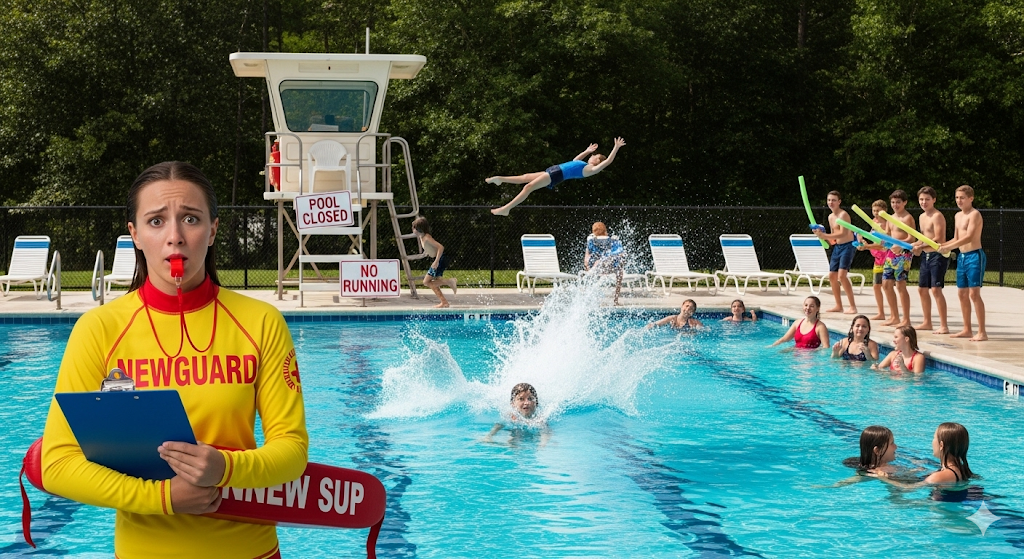
SEE Auditors conducting a lifeguard safety audit at a professional pool—lifeguard with clipboard, rescue tube, first aid kit, and lifeguard chair—illustrating key safety standards and audit preparation tips, as featured by AquaSafe Pro Training Canada.
Introduction: Why Lifeguard Safety Audits Matter
In a busy aquatic environment, even the smallest lapse in supervision can lead to a serious incident. That’s why many aquatic facilities in Ontario and across Canada turn to SEE Auditors—certified professionals trained through the Lifesaving Society—to conduct structured, objective evaluations of lifeguard scanning, zone coverage, and emergency response.
If you're responsible for aquatic safety, understanding what SEE Auditors look for can help you prepare your team and facility for success.
What Is SEE Auditor Training?
SEE (Supervision Evaluation and Enhancement) Auditors are certified professionals who complete specialized Lifesaving Society aquatic safety certification through the AquaSafe Pro Training. This SEE Auditor course teaches auditors how to assess lifeguard effectiveness using video analysis, deck observation, and industry benchmarks.
At AquaSafe Pro Training, we offer online SEE Auditor certification courses designed for aquatic supervisors, senior lifeguards, and recreation leaders looking to elevate safety standards.
Key Areas a SEE Auditor Evaluates
During a lifeguard safety audit, SEE Auditors focus on several critical components:
1. Scanning Patterns
Auditors look at whether lifeguards are using consistent, effective scanning techniques:
Are guards moving their eyes and heads, not just staring?
Are they scanning the entire zone, including surface, middle, and bottom?
Are they following a predictable pattern?
2. Zone Coverage
A common issue in many pools is overlapping or blind zones. SEE Auditors assess:
If zones are clearly defined and understood
Whether guards can see all areas of their zone
If transition points (e.g., between slides and lanes) are covered
3. Posture and Positioning
Body language matters. SEE Auditors evaluate:
Whether lifeguards are standing or seated appropriately
If they’re alert and free of distractions
Whether chairs or lifeguard stands offer adequate visibility
4. Response Time
Using live simulations or video playback, SEE Auditors time how quickly a lifeguard:
Identifies a distressed swimmer
Initiates movement or whistle signals
Reaches and rescues a victim
How to Prepare for a Lifeguard Safety Audit
Whether you’re preparing for an audit or simply looking to improve supervision practices, here are a few steps your team can take:
✅ Conduct Mock Audits
Run internal drills and have supervisors observe scanning, response, and transitions. Use peer-to-peer feedback.
✅ Reinforce Lifeguard Standards
Make sure every team member has up-to-date National Lifeguard certification and attends in-service trainings regularly.
✅ Evaluate Zone Charts
Update your zone coverage maps to reflect facility changes or crowding patterns. Use them during training briefings.
✅ Encourage Mental Readiness
Fatigue is a hidden threat. Teach guards to self-monitor for mental drift and rotate positions regularly.
Why Choose AquaSafe Pro Training for SEE Auditor Certification?
At AquaSafe Pro Training, we offer Lifesaving Society–approved SEE Auditor certification courses that can be completed fully online. Our program is ideal for:
Aquatic supervisors
Recreation coordinators
Head lifeguards seeking to enhance safety leadership
You’ll gain practical tools to:
Conduct audits
Lead feedback sessions
Elevate your team's readiness and professionalism
Conclusion
A SEE Auditor doesn't just spot flaws—they promote proactive safety through observation, coaching, and continuous improvement. If you're looking to improve aquatic risk management at your facility, becoming a SEE Auditor or working with one is a strong step forward.
➡️ Ready to Get Certified?
Enroll in AquaSafe Pro Training’s SEE Auditor Course Today!
💧 Seasonal Pool Opening: What Ontario Regulation 565 Requires
Widescreen photo of a sparkling Ontario public swimming pool being prepared for spring opening, with pool safety equipment and a visible “Ontario Regulation 565 Compliance” checklist, illustrating seasonal pool opening requirements for Aquasafe Pro Training.
Prior to opening or re-opening their pools, operators across Ontario begin the critical process of preparing their facilities. Most pools fall under Ontario Regulation 565 (Public Pools) requirements and there are specific requirements that must be met before opening— and continuing throughout the season.
This post highlights key portions of Regulation 565 that apply to seasonal public pools, focusing on water quality, documentation, supervision, and equipment — all covered in the Pool Operator Level 1 & Pool Operator 2 courses offered through AquaSafe Pro Training.
📌 Note: This article is for informational purposes only and does not constitute legal advice. Please refer directly to Ontario Regulation 565 and your local public health unit for current regulatory requirements.
📋 Key Requirements Under Regulation 565 for Seasonal Pool Operations
1. Notification of Opening (Section 5)
“No person shall operate a public pool unless the operator has given notice in writing to the medical officer of health... at least 14 days before the pool is opened for use.”
Operators must submit notice of intent to open each season. Your local public health unit may have a specific form or submission process.
2. Supervision Requirements (Section 17–18)
Lifeguard and attendant requirements vary based on the pool's class and bather load.
Lifeguards must meet recognized certification standards, such as those set by the Lifesaving Society.
Appropriate supervision ratios must be maintained at all times the pool is in operation.
3. Water Chemistry and Clarity (Section 7–11)
The water must be clear enough to see the black disc at the deepest point.
Free available chlorine and pH levels must be tested and recorded at least every two hours while the pool is in use.
Specific chemical concentration limits are outlined in the regulation, depending on the disinfectant used (e.g., chlorine or bromine).
4. Daily Recordkeeping (Section 13)
Operators must maintain a logbook that includes:
Date and time of chemical tests
Test results (free chlorine, combined chlorine, pH, temperature)
Bather load
Observations of clarity or equipment malfunctions
Records must be kept on-site and made available to public health inspectors upon request.
5. Safety Equipment and Signage (Section 20–21)
Public pools must be equipped with:
Reaching pole
Ring buoy with rope (2)
Spine board
Emergency phone or communication system
First aid kit
Required signage includes:
Health Warning Notice
Location of emergency telephone
Warning signs where lifeguards are not on duty
🎓 Want to Understand Regulation 565 in Context?
AquaSafe Pro Training offers Pool Operator Level 1 & Pool Operator Level 2 courses that walk through the full operational responsibilities of pool operators in Ontario, including:
Interpreting and applying Regulation 565
Monitoring water chemistry safely and correctly
Understanding supervisory and equipment standards
These courses are delivered by certified instructors and aligned with public health requirements and Lifesaving Society Ontario guidelines.
👉 View Course Schedule on our Courses page.
🔒 Disclaimer
This article is provided for informational purposes only and does not constitute legal or regulatory advice. For official requirements, please refer directly to Ontario Regulation 565 or consult your local public health inspector.
Standard First Aid vs CPR-HCP: Which Certification Is Right for Healthcare Workers?
Widescreen photo of healthcare workers collaborating to practice CPR chest compressions and first aid techniques on a training manikin in a hospital setting.
If you work in healthcare, having the right certification is more than just a requirement — it’s part of saving lives every day. Whether you’re a nurse, personal support worker (PSW), medical student, or caregiver, two of the most common certifications you’ll come across are Standard First Aid and CPR-HCP (Health Care Provider). But what’s the difference, and which one should you choose?
At AquaSafe Pro Training, we provide WSIB-approved First Aid & CPR training across the GTA, designed to help healthcare professionals stay compliant, confident, and ready to act in emergencies.
What Is Standard First Aid?
Standard First Aid (SFA) is a comprehensive two-day course that covers a wide range of medical emergencies and injuries. It’s one of the most widely recognized workplace certifications in Ontario and is often required for healthcare and community care roles.
Key topics include:
CPR techniques for adults, children, and infants
Choking emergencies
Severe bleeding, burns, and shock management
Musculoskeletal injuries (sprains, fractures)
Stroke, seizures, and diabetic emergencies
Poisoning and environmental emergencies
👉 Who needs it?
Healthcare workers, childcare providers, teachers, fitness professionals, and anyone working in settings where comprehensive first aid knowledge is required.
What Is CPR-HCP?
CPR-HCP (Health Care Provider) is an advanced CPR course tailored specifically to healthcare settings. It goes deeper than standard CPR training, focusing on professional-level resuscitation techniques used in hospitals, clinics, and long-term care facilities.
Key topics include:
One- and two-rescuer CPR techniques
Use of bag-valve masks (BVMs)
Responding to respiratory and cardiac emergencies in clinical settings
Advanced airway management considerations
AED (Automated External Defibrillator) use in healthcare environments
👉 Who needs it?
Doctors, nurses, PSWs, paramedics, dentists, medical students, and other healthcare professionals.
Standard First Aid vs CPR-HCP: Which One Should You Choose?
Choosing between Standard First Aid and CPR-HCP depends on your role, employer requirements, and work environment.
👉 In many healthcare roles, employers may require both Standard First Aid and CPR-HCP certification to ensure you’re prepared for a wide variety of emergencies.
Why Train with AquaSafe Pro Training?
At AquaSafe Pro Training, we make certification simple, flexible, and professional:
✅ WSIB-approved courses recognized across Ontario
✅ Experienced instructors with healthcare and emergency backgrounds
✅ On-site training available across the GTA
✅ Flexible scheduling for individuals and groups
✅ Certification valid for 3 years
Get Certified Today
If you’re a healthcare worker in the GTA, having the right certification isn’t just about meeting job requirements — it’s about being ready to save lives.
👉 Visit www.aquasafeprotraining.ca today to explore Standard First Aid and CPR-HCP courses, and contact us to book training for your workplace or healthcare team.
With AquaSafe Pro Training, you’ll gain the skills and confidence to respond when it matters most.
Legal Disclaimer
The information provided in this article is for educational and informational purposes only. It is not a substitute for professional medical advice, diagnosis, or treatment. Certification requirements may vary by workplace, regulatory body, or employer. Always consult with your employer, professional association, or a certified training provider to confirm which certifications are required for your role. AquaSafe Pro Training does not assume any liability for actions taken based on the content of this post.
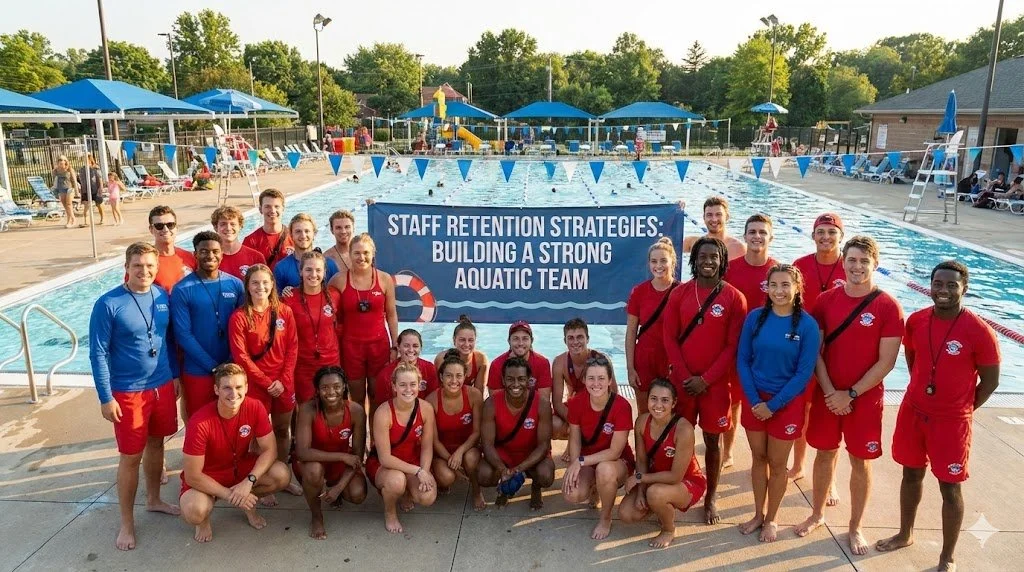
🧰 Aquatic Manager Toolbox: Scheduling, Safety Culture & Staff Retention
Professional aquatic manager toolbox course at Aquasafe Pro Training—focus on scheduling, safety culture, and staff retention for swimming pool leaders in Canada
Running a successful aquatic facility in Ontario goes far beyond ensuring pool chemistry and lifeguard coverage. As an aquatic manager, you’re not only overseeing safety—you’re shaping a culture. From scheduling systems to team morale, the operational decisions you make can either strengthen or weaken your staff’s ability to succeed.
This post highlights three key tools in every aquatic manager’s toolbox: effective scheduling, safety culture leadership, and staff retention strategies—all drawn from the Lifesaving Society’s Aquatic Manager (and Aquatic Supervisor) course delivered by AquaSafe Pro Training.
🛑 Note: This article is for informational purposes only and does not provide legal or regulatory advice.
📅 1. Scheduling: From Coverage to Consistency
Balancing lifeguard schedules can feel like solving a weekly puzzle—but a strong scheduling system is foundational to a safe and functional facility.
Best Practices in the aquatic industry:
Use fixed rotations when possible to improve performance and accountability.
Incorporate prep and close time into schedules—not just open hours.
Assign “shadow shifts” for new staff to promote mentorship and reduce risk during onboarding.
Leverage staff availability forms and digital scheduling tools to streamline communication.
Why it matters: Clear, consistent schedules reduce last-minute scrambling, prevent burnout, and show respect for your team’s time.
🛟 2. Lead the Safety Culture You Want to See
Safety isn’t a checklist—it’s a mindset. As a manager, your tone, follow-up, and visibility influence how seriously your team takes safety.
Strategies from Aquatic Manager / Aquatic Supervisor & SEE Auditor training:
Begin each shift with a quick “safety huddle” or update to foster engagement.
Encourage near-miss reporting to identify patterns before they escalate.
Participate in SEE-style audits to keep safety visible and proactive—not punitive.
Debrief drills and incidents constructively to boost confidence, not blame.
Tip: Model professionalism on deck. If you walk the pool deck in sandals or skip sign-in protocols, your team notices.
💬 3. Staff Retention Starts with Growth, Not Gimmicks
High turnover drains your team’s energy and your budget. One of the best retention strategies? Invest in development.
What we teach in our Aquatic Manager / Aquatic Supervisor courses:
Offer a path from lifeguard → aquatic supervisor → SEE auditor or pool operator
Acknowledge achievements publicly—at team meetings, in schedules, or through shoutouts.
Create mini-leadership roles (e.g., schedule coordinator, deck captain) to give returning staff ownership.
Fact: Staff who feel invested in are more likely to return next season—and more likely to step up during a crisis.
🎓 Ready to Strengthen Your Management Skills?
At AquaSafe Pro Training, we deliver Lifesaving Society-accredited aquatic leadership courses to help you and your team build safer, more organized aquatic operations:
Recommended Courses for Managers:
✅ Aquatic Supervisor / Aquatic Manager Certification
Build leadership, team communication, and emergency planning skills.✅ SEE Auditor Certification
Learn how to evaluate your facility for safety and efficiency like a pro.✅ Pool Operator Level 1 & 2
Gain a deeper understanding of mechanical systems, water chemistry, and documentation protocols.
👉 Explore upcoming course dates by visiting our Courses page.
📌 Final Thoughts
You don’t need to wait for an incident to become a better leader. Whether you're new to aquatic management or preparing for a seasonal refresh, investing in scheduling systems, safety culture, and staff development is how great aquatic teams are built.
🔒 Disclaimer: This content is intended for educational use and does not replace professional or legal advice. Always refer to your local regulations and Lifesaving Society standards.
Effective Communication: A Lifeguard Leader's Guide to In-Service Training.
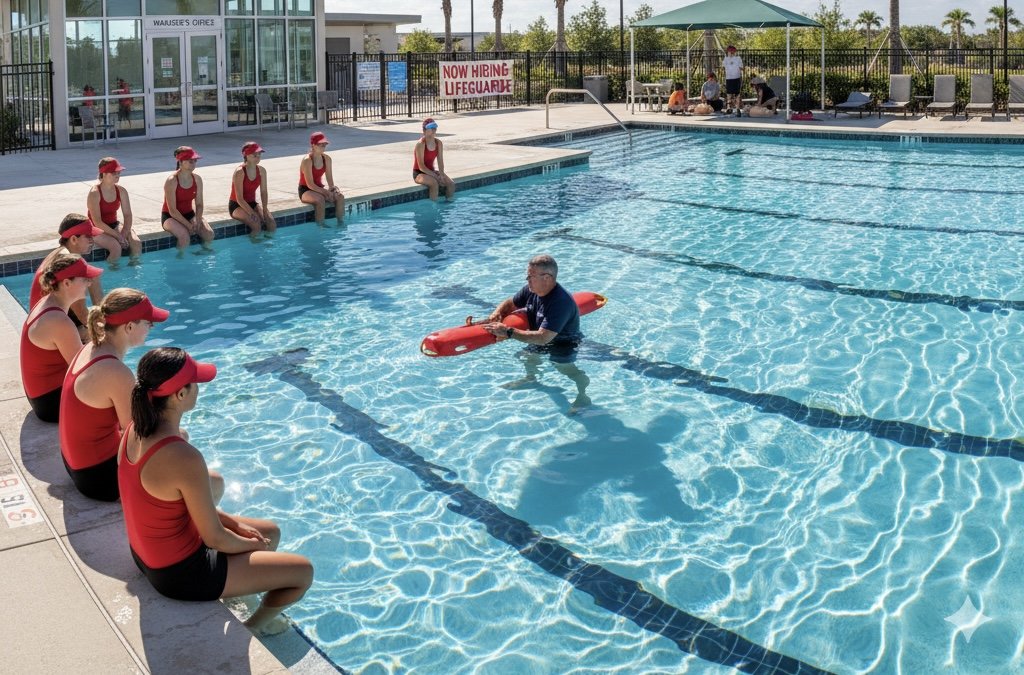
An aquatic leader delivers in-service training to a diverse group of lifeguards standing poolside, with a rescue dummy in the water.
As an aquatic leader, you know that ongoing lifeguard training is critical for maintaining high standards of aquatic safety management. In-service training isn't just a requirement; it's a vital opportunity to hone skills, reinforce emergency action plans (EAP), and build a cohesive, confident team. But the effectiveness of these sessions hinges on one crucial element: effective communication.
Here's how to elevate your Lifesaving Society in-service training through clear, concise, and engaging communication, ensuring your team is always ready for any aquatic emergency.
1. Set Clear Objectives & Expectations Upfront
Before you even start, communicate the "why" and "what."
Be Specific: Instead of "Review EAP," try "Practice EAP for a spinal injury in the deep end, focusing on proper communication during the rescue and recovery."
Explain the Value: Connect the training directly to real-world scenarios and improved workplace safety. How will mastering this skill make them better lifeguards and enhance overall aquatic facility safety?
Keywords to Use: Integrate terms like "Lifesaving Society," "aquatic safety," "emergency action plan," and "certified training" into your introduction to remind them of the professional standards.
2. Utilize Active Listening & Open Dialogue
In-service training should be a two-way street. Encourage participation and feedback.
Ask Open-Ended Questions: Instead of "Does everyone understand?" ask "What are two key takeaways from this CPR demonstration?" or "What challenges do you foresee in applying this technique during a busy shift?"
Create a Safe Space: Foster an environment where lifeguards feel comfortable asking questions, admitting uncertainties, and suggesting improvements. This builds trust and strengthens your aquatic leadership.
Encourage Peer-to-Peer Coaching: Sometimes, a peer explaining a concept is more effective. Facilitate these interactions.
3. Demonstrate, Don't Just Describe
Visual and kinesthetic learning is powerful, especially for practical skills.
Show, Don't Just Tell: When reviewing a rescue technique or the use of first aid equipment, perform a clear demonstration.
Hands-On Practice: Provide ample opportunities for lifeguards to practice. This is where skills like WSIB-approved first aid and advanced CPR become second nature.
Real-Life Scenarios: Simulate realistic emergencies. This helps the team practice communication under pressure and refine their emergency action plan execution.
4. Provide Constructive Feedback & Positive Reinforcement
Feedback is essential for growth, but it must be delivered effectively.
Be Specific and Actionable: Instead of "Good job," say "Your approach to the passive victim rescue was excellent, but let's refine the entry technique for better speed."
Focus on Improvement, Not Blame: Frame feedback as an opportunity to enhance aquatic safety skills.
Reinforce Positive Behaviors: Acknowledge efforts and successes. Positive reinforcement builds confidence and motivates continuous improvement in lifeguard training.
5. Follow Up & Reinforce Learning
Learning doesn't end when the in-service session does.
Quick Recaps: Start the next session with a brief recap of previous topics.
Regular Drills: Implement frequent, unannounced drills to test and reinforce EAP knowledge and practical skills.
Provide Resources: Share links to Lifesaving Society updates, WSIB first aid guidelines, or relevant aquatic safety articles to encourage self-directed learning.
By mastering these communication strategies, you’ll transform your in-service sessions from routine obligations into powerful tools for developing highly skilled, confident, and proactive lifeguards. Strong aquatic leadership through effective communication ensures your team is always prepared to uphold the highest standards of aquatic safety management.
How AquaSafe Pro Training Helps You Lead
Building a strong team through effective communication is at the core of true aquatic leadership. AquaSafe Pro Training is dedicated to providing the foundational knowledge and advanced skills required to achieve this. Our certified training programs are designed to do more than just meet a requirement—they empower you to be a more confident, effective leader.
Our courses, including Lifesaving Society certifications and WSIB-approved first aid, are built on practical, hands-on learning that reinforces the very communication principles we’ve discussed. When you and your team are trained by us, you are all on the same page, with shared knowledge of first aid and CPR, and a unified understanding of your emergency action plan (EAP). This common language of safety makes communication during a real-life aquatic emergency second nature.
By investing in our aquatic leadership and safety management courses, such as Aquatic Supervisor, Aquatic Manager, Pool Operator Level 1, or SEE Auditor, you'll learn not only how to perfect your own skills but also how to effectively train and motivate others. This ensures your entire team operates with a high level of professionalism and shared responsibility, making your in-service training sessions more productive and ultimately, your facility safer.
Disclaimer: This blog post is for informational purposes only and does not constitute professional advice. The information provided is intended as a general guide and should not be considered a substitute for certified training or compliance with all applicable municipal, provincial, and federal regulations. AquaSafe Pro Training is not liable for any actions taken or not taken based on the contents of this post.
🛟 Top 5 Safety Standards Every Pool Supervisor Should Know (According to the Lifesaving Society)
Pool supervisor conducting a safety inspection at an indoor aquatic facility with certified lifeguards, safety signage, and emergency equipment — representing AquaSafe Pro Training’s standards for pool supervision and Lifesaving Society best practices in Ontario.
In aquatic environments, strong supervision is the cornerstone of safety. Whether you're running a municipal pool, waterpark, or condo facility, the pool supervisor plays a crucial role in preventing incidents, supporting lifeguards, and promoting public trust.
This article outlines five key safety standards every supervisor (or pool operator) in Ontario should understand — based on Ontario Regulation 565 (Public Pools) and guidance from the Lifesaving Society, Canada’s leading authority on aquatic safety.
📝 Note: This article is for informational purposes only and does not constitute legal advice. Always consult your local health authority or legal professional for regulatory compliance.
✅ 1. Maintain Proper Lifeguard Ratios and Positioning
The Lifesaving Society recommends supervision ratios based on requirements in Ontario Regulation 565, such as pool size, number of bathers, and type of activity. Common standards include:
Lifeguard and Instructor ratios based on activity and number of bathers/candidates (as well as pool size)
Additional lifeguards for slides, deep ends, or where visibility is limited
Lifeguards must be positioned to see all areas of the pool — no blind spots
Supervisors should ensure staffing levels are scheduled to meet or exceed these benchmarks, especially during peak hours.
✅ 2. Post and Enforce Required Signage
Proper signage is essential for both public communication and incident prevention. Signs should include:
Pool rules (no diving, no running, etc.)
Depth markings (clearly visible at regular intervals)
“Unsupervised Pool” signage when applicable
Emergency contact and AED location signage
According to Ontario Regulation 565, and the Lifesaving Society, signage must be “visible, clear, and durable” and supervisors should inspect it daily.
✅ 3. Conduct Regular Safety Checks and Documentation
Supervisors are responsible for implementing daily, weekly, and monthly safety inspections, including:
Visual inspection of pool deck hazards
Verifying accessibility of lifesaving equipment
Confirming first aid supplies are stocked
Ensuring the emergency action plan (EAP) is visible and up to date
Maintain written records of all inspections — not only for safety, but also as part of your facility’s due diligence. Owners/operators should consider certification in the Lifesaving Society’s Aquatic Safety Inspector Course delivered by AquaSafe Pro Training.
✅ 4. Support Emergency Response Readiness
Every supervisor should ensure staff are trained and drilled in responding to:
Drownings and near-drownings
Spinal injuries
Medical emergencies (e.g. seizures, heart attacks)
Chemical spills
Consider running scenario-based emergency drills at least once per month.
✅ 5. Promote a Positive Safety Culture
Beyond checklists and ratios, a great supervisor fosters a team culture that prioritizes communication, alertness, and professional conduct. That means:
Supporting continuous training
Encouraging lifeguards to speak up about unsafe situations
Holding regular team debriefs or “safety huddles”
Facilities with a proactive, positive safety culture consistently report fewer incidents and stronger team cohesion.
🎓 Ready to Strengthen Your Supervision Skills?
AquaSafe Pro Training offers courses to help you lead with confidence:
Whether you're preparing for a busy summer season or want to align your facility with Ontario’s leading safety practices, we're here to help.
➡️ Explore upcoming courses on our Courses page.
🔒 Disclaimer
This article is for informational purposes only and does not constitute legal advice. For regulatory guidance, please consult your local health department or a legal professional.
🏢 First Aid at Work: 5 Essential Skills Every Office Employee Should Know
Office first aid training session with instructor bandaging an employee’s arm, used for AquaSafe Pro Training blog on workplace first aid certification in Ontario.
Introduction: Emergencies Don’t Just Happen at the Pool
When people think of First Aid training, they often picture lifeguards or paramedics. But the truth is, most medical emergencies occur in workplaces, schools, and offices—not in aquatic centres.
From a cardiac arrest at a desk to a slip on a wet office floor, workplace staff need the right skills to respond quickly while waiting for emergency services. That’s why Ontario workplaces require certain staff to hold valid Standard First Aid & CPR certification under WSIB guidelines.
At AquaSafe Pro Training, we provide Lifesaving Society Standard First Aid & CPR-C certification designed to prepare employees for real emergencies in everyday work environments.
1. ❤️ CPR & AED Response in the Workplace
Cardiac arrest can strike anyone, anywhere—including in an office.
Employees trained in CPR and AED use can provide life-saving interventions before paramedics arrive.
2. 🩹 Wound Care and Bleeding Control
Office accidents—from paper cutter mishaps to slips and trips—can result in cuts or bleeding injuries. Staff with first aid certification know how to control bleeding, apply bandages, and prevent infection.
3. ⚡ Responding to Choking
Whether in a lunchroom or staff meeting, choking emergencies are common in workplaces. Training ensures employees can recognize the signs and provide choking assistance or back blows safely.
4. 🤕 Managing Slips, Trips & Falls
Wet floors, staircases, and cluttered hallways can lead to injuries. Standard First Aid training equips staff to stabilize sprains, strains, and potential fractures until medical help arrives.
5. 🤧 Recognizing Allergic Reactions
With food allergies and environmental sensitivities on the rise, knowing how to use an EpiPen or provide care for anaphylaxis is a critical workplace first aid skill.
Why AquaSafe Pro Training?
Our Lifesaving Society–approved courses are tailored for Ontario workplaces and include:
Standard First Aid & CPR-C Certification (WSIB-recognized)
Emergency First Aid for smaller workplaces
CPR-only courses (Levels A, B, C)
Customized on-site workplace first aid training
We help businesses stay compliant, reduce risk, and build a culture of safety.
⚠️ Compliance Note
This content is for educational purposes only and does not constitute legal advice. Employers must review Ontario Ministry of Labour and WSIB first aid requirements and consult with their local health and safety authority for compliance.
📢 Take Action
Don’t wait for an emergency to highlight the gaps in your workplace safety.
👉 Book your Standard First Aid & CPR-C certification with AquaSafe Pro Training and ensure your employees are ready when it matters most.
Disclaimer
This content is provided for informational and educational purposes only and does not constitute professional medical or legal advice. Information regarding WSIB, the Ontario Public Pools Regulation (O. Reg. 565/90), and other regulatory standards is for general guidance and may be subject to change. Always consult a qualified legal professional, the current WSIB requirements, or your local Public Health Unit for specific compliance needs. Our training provides immediate care skills, but is not a substitute for professional medical attention; for emergencies, call 911 immediately. AquaSafe Pro Training is not responsible for any actions taken based on this generalized information.
🏊 Are You Ready for the Season? Pre-Opening Pool Safety Checklist (Ontario Edition)
Pre-opening pool safety checklist illustrated for Ontario homeowners, featuring safety equipment, pool covers, and certified lifeguards — essential tips from Aquasafe Pro Training for a safe swim season preparation.
As owners/operators prepare for each pool season, facility operators and aquatic supervisors across Ontario prepare to open safely, confidently, and in line with best practices. Whether you operate a public pool, a hotel facility, or a community centre, preparation isn’t just about filling the pool — it’s about ensuring your team and your site are ready.
This article offers a pre-opening pool safety checklist designed to help you reduce incidents, reinforce staff readiness, and align with Lifesaving Society safety recommendations. While it does not offer legal advice, it emphasizes training-based standards and operational readiness — essential for any responsible aquatic operator.
✅ Pre-Opening Pool Safety Checklist
1. Staff Certifications Are Up to Date
Lifeguards hold valid National Lifeguard certifications (Pool or Waterpark, as appropriate)
Supervisors and operators have completed:
SEE Auditor (optional but strongly recommended)
Aquatic Supervisor or Aquatic Manager (optional but strongly recommended)
First Aid and CPR certifications are current and documented
2. Safety Equipment Inventory Is Complete and Functional
Buoys, reaching poles, spinal boards, and first aid kits are:
In good condition
Accessible at designated locations
Automated External Defibrillator (AED) is tested and charged
Emergency communication devices (phones/intercoms) work
3. Signage Is Posted and Legible
Required signage is posted (e.g., depth markings)
Signs are:
Durable
Contrast clearly with the environment
Visible from all pool access points
4. Chemical Handling and Storage Is in Compliance
Operators are trained in WHMIS and chemical safety
MSDS sheets are accessible and updated
Chemicals are stored:
Away from the public
In labeled, ventilated, and secure areas
5. Pool Deck and Surroundings Are Hazard-Free
Surfaces are clean, dry, and non-slip
Furniture and lane ropes are stowed safely
Drains, suction covers, and anti-entrapment features are inspected
6. Water Quality Is Balanced
Chlorine/bromine levels meet public health standards
pH is within the 7.2–7.8 range
Daily records are started before opening day
Water clarity meets regulatory requirements
7. Emergency Procedures Are Reviewed
Staff complete pre-season Emergency Simulations/Drills
Emergency Response Plan is:
Reviewed
Updated
Posted in key areas (guard office, staff room)
8. Documentation Is In Place
Daily checklists (safety, chemical, equipment) are printed or digitally set up
Training records, certifications, and policy manuals are on file and current
🎯 Pro Tip: Use the SEE Auditor Mindset
Even if your facility isn’t undergoing a formal Lifesaving Society SEE Audit, approach your pre-opening with that level of care. That mindset improves safety, accountability, and team culture.
🚫 Disclaimer
This article is for informational purposes only and does not constitute legal or regulatory advice. Operators are encouraged to consult their local public health authority and qualified legal professionals regarding specific compliance requirements.
💡 Want to Feel Confident This Season?
Consider enrolling your team in:
SEE Auditor Certification
Aquatic Supervisor or Aquatic Manager Courses
Visit our Courses page to browse upcoming course dates and prepare with confidence.
Disclaimer
This content is provided for informational and educational purposes only and does not constitute professional medical or legal advice. Information regarding WSIB, the Ontario Public Pools Regulation (O. Reg. 565/90), and other regulatory standards is for general guidance and may be subject to change. Always consult a qualified legal professional, the current WSIB requirements, or your local Public Health Unit for specific compliance needs. Our training provides immediate care skills, but is not a substitute for professional medical attention; for emergencies, call 911 immediately. AquaSafe Pro Training is not responsible for any actions taken based on this generalized information.
Top 10 Benefits of Online Aquatic Safety Training in Ontario
Online Aquatic Safety Training: A diverse group of people, including a young man, a middle-aged woman, and a senior man, are shown taking an online aquatic safety course. Their computer screens display images of lifeguards and children in a swimming pool, while a lifeguard in a pool is shown demonstrating CPR on a training dummy, representing the practical application of the online training. The background subtly features the Toronto skyline, indicating the location is Ontario.
Aquatic safety is more important than ever, especially in Ontario, where pool and waterfront regulations are continually evolving. Whether you are a lifeguard, pool operator, or aspiring aquatic leader, online aquatic safety training offers a flexible and effective way to enhance your skills. Here are the top 10 benefits of online aquatic safety training in Ontario offered by Aquasafe Pro Training
1. Flexible Learning from Anywhere in Ontario
Online aquatic safety courses allow you to learn at your own pace from any location in Ontario. Whether you are in Toronto, Ottawa, or smaller communities, you can complete your aquatic leadership, safety management, or pool operator certification without the need to travel.
2. Enhanced Aquatic Leadership Skills
Programs focused on aquatic leadership provide essential knowledge for managing pools and aquatic facilities. Online courses cover leadership techniques, emergency response planning, and staff supervision—all crucial for aspiring aquatic managers.
3. Accessible for All Schedules
Balancing work, school, or personal commitments can make in-person training challenging. Online courses are available 24/7, allowing participants to learn when it suits their schedule.
4. Cost-Effective Training Options
Online training often costs less than in-person courses, reducing travel, accommodation, and material expenses. This makes essential certifications like Aquatic Supervisor, Aquatic Manager, SEE Auditor, or Pool Operator more accessible.
5. Up-to-Date Curriculum with Ontario Standards
Online aquatic safety courses in Ontario are aligned with current provincial regulations, including O. Reg. 565. You can trust that your lifeguard training or aquatic leadership certification meets industry standards.
6. Interactive Learning Materials
Many online programs include videos, quizzes, and simulations that replicate real-life scenarios. This interactive approach helps learners retain critical safety information more effectively.
7. Immediate Access to Certification
Upon completing online courses, participants often receive digital certification almost immediately through Find a Member. This is particularly beneficial for workplaces that require certification for employees.
8. Safer Learning Environment
Online learning eliminates the need for group gatherings during training, reducing exposure to illnesses while still providing comprehensive safety instruction.
9. Opportunities for Career Advancement
By completing online aquatic safety training, you can enhance your qualifications for supervisory roles, including aquatic leadership positions, pool management, and lifeguard coordination.
10. Environmentally Friendly
Online courses reduce the need for printed materials and travel, making them a sustainable option for environmentally conscious learners.
Conclusion
Online aquatic safety training in Ontario offers unmatched convenience, flexibility, and career growth opportunities. Whether you are pursuing aquatic leadership, or preparing for pool operator certification, online courses provide a comprehensive and accessible way to stay certified and safe.
Take the next step in your aquatic career and explore the online training options available in Ontario today!
Legal Medical Disclaimer
The content provided in this article is for educational and informational purposes only. It is not a substitute for professional medical or legal advice, diagnosis, or treatment. Always seek the guidance of a qualified healthcare professional or certified first aid instructor for any questions or concerns about first aid, CPR, or aquatic safety, and consult a licensed legal professional for legal matters. AquaSafe Pro Training and its affiliates are not liable for any injury, illness, legal issue, or other consequences resulting from reliance on the information provided here.
How to Bring First Aid & CPR Training to Your Workplace or Team in the GTA with AquaSafe Pro Training
Aquasafe Pro Training instructor demonstrating CPR while teaching a first aid and cpr training course in the GTA.
Ensuring your workplace or team is equipped with First Aid and CPR training in the Greater Toronto Area (GTA)isn't just a regulatory requirement—it's a vital investment in safety and peace of mind. Emergencies can happen anytime, and having trained personnel can make the difference between life and death. Here's how you can bring professional training directly to your team with AquaSafe Pro Training.
Why Choose AquaSafe Pro Training?
At AquaSafe Pro Training, we are committed to equipping individuals and teams with the skills and knowledge needed to respond confidently in emergencies. Our expert instructors, backed by years of industry experience, provide hands-on training in:
Aquatic Safety Management: Courses in aquatic leadership and pool operations.
WSIB-Accredited First Aid and CPR: Certified training for workplace safety.
Youth Programs: Babysitting training and home alone courses.
As an Affiliate Member of the Lifesaving Society, we are licensed to offer Swim to Survive programs and other courses that meet the highest standards of safety and certification. Whether you're a lifeguard, instructor, pool operator, or simply looking to enhance your emergency response skills, AquaSafe Pro Training is here to help you prepare for real-world situations with confidence.
Steps to Bring AquaSafe Pro Training to Your GTA Workplace
1. Assess Your Workplace Needs
Before booking a course, evaluate your team's requirements:
How many employees need training?
What type of environment do they work in (office, construction, warehouse)?
Are there high-risk areas that require advanced first aid skills?
This helps tailor the training to be relevant and effective.
2. Choose the Right Course
AquaSafe Pro Training offers a variety of courses to suit different needs:
Emergency First Aid and CPR "B": Ideal for low-risk environments.
Standard First Aid and CPR "C": Comprehensive training for general workplace safety.
CPR-Health Care Provider: Advanced training for healthcare professionals.
3. Schedule On-Site or Virtual Training
Training can be delivered on-site at your workplace. Some providers also offer hybrid or virtual options, making it flexible for different team sizes and locations across the GTA.
4. Maintain Certification
First Aid and CPR certifications typically expire every 3 years. Set reminders for recertification to ensure your workplace remains compliant and prepared.
Benefits of On-Site Training with AquaSafe Pro Training
Convenience: No travel needed for employees.
Team Building: Encourages collaboration and confidence in emergency scenarios.
Customizable Content: Focus on real risks your team may encounter.
Compliance Made Easy: Meets provincial safety regulations without disruption.
Get Started Today
Bringing First Aid & CPR training to your workplace in the GTA is easier than you think with AquaSafe Pro Training. Start by contacting us, assessing your team's needs, and scheduling your session. Safety isn't optional—it's essential.
Invest in training today and make sure your team is prepared to save lives when it matters most.
🌊 The Evolution of Water Safety Standards in Canada: A Historical Perspective
Evolution of water safety standards in Canada with historical images, featured by Aquasafe Pro Training.
Water safety in Canada has come a long way over the past century. From the earliest public pools and beach patrols to today’s evidence-based regulations and professional certifications, the policies and standards governing aquatic environments have evolved to reflect research, technology, and the growing importance of public health.
This article provides an educational overview of how Canadian water safety standards have developed over time—and how these historical milestones continue to shape training and facility practices today.
Disclaimer: This information is intended for general educational purposes only. It is not legal advice or a substitute for consultation with qualified regulatory authorities or legal counsel.
🏊 Early Foundations: Public Health and Basic Rescue
In the early 1900s, formal water safety guidelines were minimal. Many aquatic facilities operated without standardized supervision requirements, and lifeguard training was often informal or based on local custom.
By the 1950s, the growing popularity of public pools and swimming lessons led to increased attention to:
Drowning prevention through basic instruction and signage
Development of rescue techniques such as reach and throw assists
The first organized lifesaving training programs
Organizations like the Royal Life Saving Society (RLSS) began establishing structured programs to teach rescue skills and water safety awareness, laying the groundwork for national standards.
📘 Building Standards: The Rise of Lifesaving Certification
In the 1960s and 1970s, Canadian provinces began adopting more formal health regulations governing pool operations, water quality, and supervision. Over time, these measures evolved into enforceable regulations, such as Ontario’s Public Pools Regulation 565, which continues to govern many operational requirements.
This period also saw:
The creation of standardized lifeguard certification programs (e.g., Bronze Medallion, Bronze Cross, National Lifeguard)
Increasing focus on swimming instruction standards
Adoption of structured first aid training as part of aquatic staff qualifications
The Lifesaving Society, among other organizations, became a central authority in defining certification pathways and minimum competencies for aquatic professionals.
🔄 Modernization and Evidence-Based Practices
From the 1990s onward, water safety standards have continued to evolve, reflecting research into prevention strategies and incident data. Some notable developments include:
Enhanced supervision requirements and clear ratios for different pool classifications
Requirements for Emergency Response Plans (ERPs) and documented staff training
Updated equipment standards, signage, and facility design considerations
Expanded recognition of aquatic leadership roles—including Aquatic Supervisor and Aquatic Manager certifications
In Ontario, the 2025 updates to O. Reg. 565 are the most recent example of these efforts to align policy with modern best practices and public health recommendations.
💡 How Historical Standards Inform Today’s Training
Understanding the evolution of water safety standards helps illustrate why today’s aquatic professionals must meet rigorous training requirements.
For example:
Lifeguard certifications build on decades of documented rescue techniques and supervision principles
Aquatic Supervisor and Aquatic Manager certifications are designed to help leaders implement policies developed over generations
Modern in-service training reflects lessons learned from historical incident trends and research
At AquaSafe Pro Training, we deliver courses that are rooted in this legacy—offering instruction based on Lifesaving Society Ontario’s recognized standards, and designed to help aquatic professionals build the competencies that today’s regulations require.
📚 Learn More About Aquatic Leadership Training
If you are interested in exploring the certifications that have grown out of Canada’s evolving safety framework, consider:
Aquatic Manager Certification: Focused on facility operations, supervision planning, and risk management
Aquatic Supervisor Courses: Building skills in staff leadership and compliance
Pool Operator Certifications: Based on best practices and requirements to operate aquatic facilities
SEE Auditor Courses: Focused on how to evaluate lifeguard and instructional scanning and formations, respectively
While policies and expectations continue to evolve, one thing remains constant: the role of education and professional training in supporting safe, effective aquatic environments.
Disclaimer: This article is provided for educational purposes only and does not constitute legal advice or regulatory guidance. Always consult official resources and your local public health authority for compliance information.
Why the Aquatic Manager Certification is the New Standard for Facility Risk Mitigation in Ontario
A group of professionals in blue polo shirts training in an aquatic facility. On the left, a smaller group gathers around a pool operations control panel, with one person pointing. On the right, other trainees practice CPR on mannequins. In the background, there's a large indoor swimming pool. An overlaid graphic shows an upward trend line for 'Risk Mitigation' and a downward trend line for 'Operating Costs', illustrating the benefits of professional aquatic and safety training.
The landscape of aquatic safety management in Ontario has evolved. Being minimally compliant with public pool regulations is no longer enough to protect your facility, staff, or bottom line. Today’s top aquatic facility managers recognize that advanced training is the key to preventing major incidents and dramatically reducing liability.
At AquaSafe Pro Training, we specialize in providing the professional certifications that transcend basic competency and put you in control of your facility's safety and operational efficiency. We are your trusted partner for WSIB-approved training and advanced aquatic leadership development.
Pillar 1: Aquatic Manager Certification – The Ultimate Risk Reduction Tool
The Aquatic Manager certification (often listed as Aquatic Manager Course) is the most critical professional development step for anyone overseeing operations. Unlike certifications that focus on in-water skills, this course is designed for the modern executive and supervisor.
The Aquatic Manager Course provides the comprehensive knowledge required to confidently direct aquatic programs and ensure attentive compliance with health and safety standards.
This training teaches you the risk mitigation strategy needed to implement advanced aquatic risk management systems that satisfy municipal and provincial inspectors. You'll master the Ontario Public Pools Regulation (O. Reg. 565/90) requirements that govern your entire operation. This course is the clear professional step beyond an Aquatic Supervisor role, equipping you for true executive oversight. Our related SEE Auditor and Pool Operator certifications also prepare you to conduct rigorous safety audits, a critical skill for proactive facility management. Looking to audit your own facility? See our SEE Auditor course dates.
Pillar 2: Pool Operator Certification – Saving Money Through Technical Expertise
Facility maintenance and water quality are the greatest ongoing expenses for an aquatic facility. The Pool Operator Level 1 and Pool Operator Level 2 courses are not just mandatory for compliance; they are a direct investment that provides tangible financial returns.
Pool Operator Level 1 is the foundation for all swimming pool operations. You’ll master the essential knowledge of filtration, circulation, and basic water chemistry to maintain a safe pool in accordance with provincial health regulations. Pool Operator Level 2 dives deeper into advanced pool chemical application, regulatory standards for spas and wading pools, and complex problem-solving. This advanced certification enables your team to safely adjust chemical levels and prevent expensive equipment failure.
The ROI of certification is clear: certified operators prevent chemical imbalances, reducing costly repairs, emergency closures, and the need for excessive chemical use. This translates directly to reduced aquatic facility operating costs. Ready to stop guessing about water chemistry? Register for your Pool Operator Level 1 & 2 course today!
Pillar 3: WSIB-Approved First Aid & CPR – Non-Aquatic Workplace Compliance
Compliance with the WSIB First Aid requirements in Ontario is mandatory for every single business, not just pool operators. As a trusted provider of Standard First Aid and CPR and Emergency First Aid, AquaSafe Pro Training ensures your entire organization meets the legal mandate under Regulation 1101 of the Workplace Safety and Insurance Act (WSIA).
Ensure your business is compliant. Book your WSIB-approved First Aid & CPR training.
Leap to the Top with AquaSafe Pro Training
We don't just teach courses; we train leaders in aquatic safety and business efficiency. By focusing exclusively on safety management, pool operator training, and workplace compliance, we offer a professional development pathway that is second to none.
Don't settle for minimal compliance. Choose AquaSafe Pro Training for your Aquatic Manager, Pool Operator Level 1 & 2, Standard First Aid & CPR, Emergency First Aid & CPR, and SEE Auditor certifications.
Visit our main certifications page to find your next course and elevate your career or facility's safety standard.
Disclaimer
This content is provided for informational and educational purposes only and does not constitute professional medical or legal advice. Information regarding WSIB, the Ontario Public Pools Regulation (O. Reg. 565/90), and other regulatory standards is for general guidance and may be subject to change. Always consult a qualified legal professional, the current WSIB requirements, or your local Public Health Unit for specific compliance needs. Our training provides immediate care skills, but is not a substitute for professional medical attention; for emergencies, call 911 immediately. AquaSafe Pro Training is not responsible for any actions taken based on this generalized information.
🏊♂️ Staff Training, In‑Service Drills, and Supervision: Building a Culture of Safety
Diverse team of professionals participating in a workplace safety training session with a supervisor overseeing in-service drills, wearing safety gear in a modern training facility — promoting a culture of safety at Aquasafe Pro Training.
High-quality training and effective supervision are cornerstones of a safe and well-run aquatic facility. In Ontario and across Canada, aquatic professionals are held to high expectations for maintaining safety standards, providing proactive supervision, and preparing their teams to respond confidently to emergencies.
While regulations set the minimum requirements, investing in robust training and professional development can help prevent incidents before they occur and build a culture of safety that benefits everyone.
Note: This article is for general educational purposes and does not constitute legal advice or replace consultation with your local public health unit.
👀 Why Ongoing Training and Supervision Matter
Even the most experienced aquatic staff need regular refreshers and clear direction to do their jobs effectively. Consistent training and supervision help ensure:
✅ Lifeguards remain vigilant and confident in their skills
✅ Policies and emergency procedures are clearly understood
✅ New staff are onboarded to the same high standards
✅ Your facility meets—and often exceeds—provincial regulations
The Lifesaving Society’s Safety Standards recommend that all aquatic facilities develop structured training plans that include:
Initial orientation and onboarding
Ongoing in-service training (e.g., rescue drills, equipment checks, emergency simulations)
Clear supervision plans for different times of day and facility activity levels
Documentation of training, drills, and staff performance reviews
🧭 The Role of the Aquatic Manager Certification
To support aquatic leadership in developing and overseeing these systems, Aquasafe Pro Training offers the Lifesaving Society’s Aquatic Manager certification.
This recognized course helps aquatic leaders:
✅ Develop comprehensive supervision and operating procedures
✅ Understand risk management principles and how to apply them
✅ Plan effective in-service training and performance evaluations
✅ Navigate regulatory requirements and recommended practices
✅ Lead teams with confidence and professionalism
Many municipalities and facility operators consider Aquatic Manager (or Aquatic Supervisor) certification an essential qualification for senior staff. Even when not formally required, these courses demonstrate a commitment to high standards and equip leaders to handle complex responsibilities.
If you’re an aquatic professional looking to advance your career—or an employer seeking to build leadership capacity—this certification is one of the most respected options available.
🎓 How AquaSafe Pro Training Can Help
At AquaSafe Pro Training, we deliver Lifesaving Society Ontario courses, including:
✅ Aquatic Manager
✅ Aquatic Supervisor
✅ SEE Auditor
Our instructors combine years of hands-on aquatic experience with a deep understanding of Ontario regulations and best practices. Whether you need to certify new supervisors or lifeguards, or plan professional development for your team, we can help you build confidence and consistency across your operation.
💡 Next Steps for Facility Operators
If you haven’t reviewed your training and supervision plan this season, consider encouraging senior staff to complete Aquatic Manager or Aquatic Supervisor certification, and/or other important courses such as Pool Operator Level 1 and/or Level 2, as well as SEE Auditor.
Disclaimer: This content is intended for general educational purposes. For site-specific regulatory advice, please consult your public health inspector or legal counsel.
Ready to enhance your team’s training and leadership capacity?
Review our Courses page to learn more about our Aquatic Manager or other certification courses and customized in-service programs.
Navigating Your Lifesaving Society Recertification: A Step-by-Step Guide
Students and instructors practicing CPR and first aid techniques on manikins in a modern classroom setting, emphasizing hands-on training from AquaSafe Pro Training for Lifesaving Society recertification.
Is your first aid or CPR certification about to expire? If so, you’re likely searching for “Lifesaving Society recertification” or “CPR recertification Ontario” to keep your skills current and your certification valid. Recertifying is a crucial step for professionals and individuals who need to maintain their credentials for work, school, or personal safety.
This guide will walk you through what to expect in a Lifesaving Society recertification course, helping you feel prepared and confident before you even arrive.
What Certifications Can Be Recertified?
The Lifesaving Society offers a streamlined process for renewing several key certifications, but the requirements and validity periods vary. It is critical to know your certificate’s expiry date and recertification policy.
Standard First Aid & CPR-C: This certification is valid for 36 months (3 years). As per WSIB regulations, you can only recertify your Standard First Aid once on a recertification course. After that, you must take the full two-day course again to renew your certification.
Emergency First Aid & CPR-C: This certification is valid for 24 months (2 years). You can recertify by retaking the full course, even after it has expired.
CPR-C (when taken alone): CPR certifications are valid for 24 months (2 years), but some employers may require annual renewal.
Lifesaving Leadership Awards (e.g., Lifesaving Instructor): These awards are held for life but must be kept “current” every 24 months (2 years) by earning the required professional development points.
Other awards (e.g., NL): Other awards may also require recertification every two years or in some other cases awards do not expire—always check the Lifesaving Society Program Guide.
What to Expect During the Recertification Course
A recertification course is a shortened version of the original program. It’s designed to refresh your knowledge and test your practical skills, not to re-teach the entire curriculum from scratch. You can expect a fast-paced environment that focuses on:
Knowledge Review: The instructor will quickly review key concepts, such as the principles of the EMS system, scene management, and legal considerations. This is a great opportunity to ask questions and clarify any topics you're unsure about.
Skill Practice: This is the most hands-on part of the course. You will practice critical skills like CPR, managing an obstructed airway (choking), and controlling severe bleeding. The instructor will observe and provide feedback to ensure your technique is still effective and up to standard.
Scenario-Based Learning: You will work through realistic scenarios, putting your skills into practice in a simulated emergency. This tests your ability to make quick, sound decisions under pressure.
What to Bring With You
To ensure a smooth recertification day, come prepared with a few key items:
Your previous Lifesaving Society certificate (the original or a clear copy).
A government-issued photo ID.
Comfortable clothing suitable for hands-on practice (you will be kneeling and moving around).
A positive attitude!
Required resources
Tips for a Successful Recertification
Review Beforehand: Take some time to review your old course materials, such as your workbook or notes. This will help refresh your memory on key procedures and terms.
Stay Focused: The course moves quickly, so pay close attention during the review and practice sessions.
Ask Questions: Don’t be afraid to ask for clarification on any technique or concept. The instructor is there to help you succeed.
Practice Makes Perfect: If you have the chance, practice your CPR compressions and rescue breaths on a manikin before the course. This can help build muscle memory.
Ready to Renew Your Certification?
Maintaining a valid first aid and CPR certification is a vital part of being a responsible citizen and a skilled professional. By understanding what to expect from your first aid renewal course, you can confidently take this important step.
For more information and to register for your recertification course, visit our website and find a date that works for you. Keep your skills sharp and your certification current with AquaSafe Pro Training.
Disclaimer: The following content is for informational purposes only and does not constitute legal or medical advice. Always refer to the official guidelines from the Lifesaving Society and relevant regulatory bodies for specific requirements and standards. AquaSafe Pro Training is not responsible for any actions taken based on this information. For all medical emergencies, please consult a qualified healthcare professional.
The Difference Between First Aid, CPR, and AED Training
First aid training equipment including CPR mannequin, AED device, gloves, and first aid kit on a table.
When people search for safety courses, terms like first aid, CPR, and AED training are often used interchangeably. While each skill plays an important role in saving lives, they are not the same. Understanding the differences—and how they work together—can help you choose the right first aid course for your needs.
At AquaSafe Pro Training, we provide hands-on, certified courses that cover First Aid, CPR, and AED so you can act confidently in emergencies at home, school, or work.
🩺 What is First Aid Training?
First aid is the immediate care given to someone who is injured or suddenly ill before professional medical help arrives.
Key Skills You’ll Learn in First Aid Training:
Treating cuts, scrapes, and burns
Managing sprains, fractures, and dislocations
Responding to choking incidents
Recognizing and stabilizing medical emergencies (shock, seizures, allergic reactions)
Building and using a first aid kit
✅ First aid is broad—it prepares you to handle a variety of everyday accidents and emergencies.
❤️ What is CPR Training?
CPR (Cardiopulmonary Resuscitation) is a lifesaving technique used when someone’s heart stops beating or they are not breathing.
CPR Training Teaches You:
How to recognize cardiac arrest
Performing chest compressions at the correct depth and rate
Providing rescue breaths (when appropriate)
Using CPR techniques for adults, children, and infants
✅ CPR keeps oxygen flowing to the brain and vital organs until advanced medical help arrives.
⚡ What is AED Training?
An AED (Automated External Defibrillator) is a portable device that analyzes the heart’s rhythm and can deliver an electric shock to restore a normal heartbeat.
AED Training Includes:
Recognizing when an AED is needed
Step-by-step use of the device
Safety precautions when operating an AED
Combining AED use with CPR for maximum effectiveness
✅ AEDs are designed to be user-friendly, but training ensures you can act quickly and without hesitation.
🔑 The Key Differences
First Aid
Focus: General medical care
Common Scenarios: Cuts, burns, allergic reactions, injuries
Goal: Stabilize the person until medical help arrives
CPR (Cardiopulmonary Resuscitation)
Focus: Cardiac arrest and breathing emergencies
Common Scenarios: Heart attack, drowning, choking
Goal: Keep blood and oxygen flowing to the brain and vital organs
AED (Automated External Defibrillator)
Focus: Restarting a stopped heart
Common Scenarios: Sudden cardiac arrest
Goal: Deliver an electric shock to restore a normal heart rhythm
🧰 Why Take All Three?
While each training course offers unique skills, they are most effective when combined:
First aid covers everyday emergencies.
CPR ensures you can respond to life-threatening cardiac events.
AED training gives you the confidence to use lifesaving equipment.
Most workplaces, schools, and community organizations now require First Aid + CPR + AED certification for staff and volunteers.
🚑 Get Certified with AquaSafe Pro Training
At AquaSafe Pro Training, we offer comprehensive courses that combine First Aid, CPR, and AED training. Our certified instructors provide real-world practice so you’ll be prepared to act in any emergency.
👉 Enroll today at AquaSafeProTraining.ca and gain the skills to save a life.
Disclaimer
This article is for informational purposes only and does not replace certified training or professional medical advice. Always seek emergency medical services when needed.